Beyond the Screen: Why We Are Reclaiming the “Organic Dopamine” Lifestyle
April 16, 2026
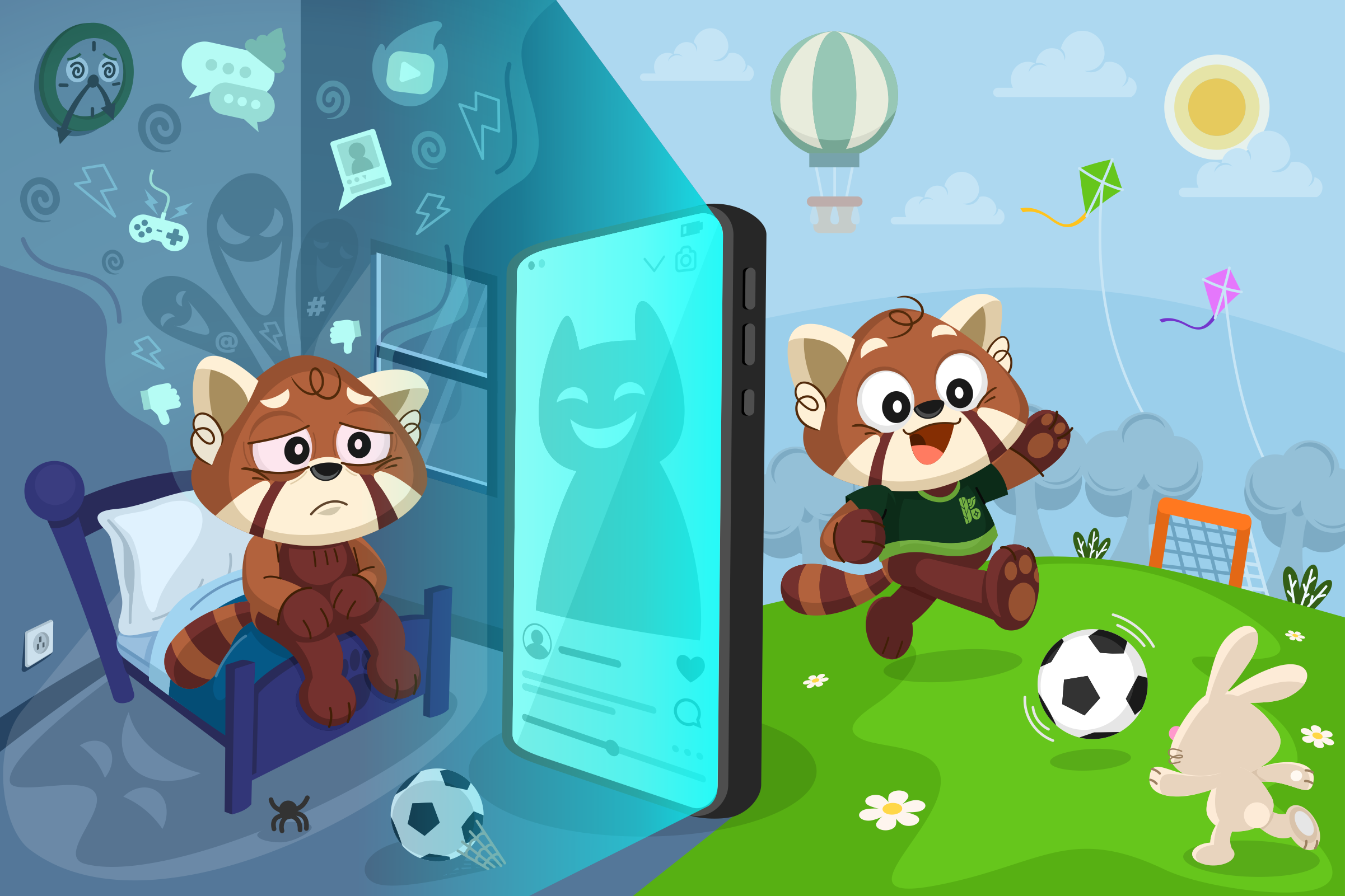
In the modern era, we often measure progress by the speed of our internet and the resolution of our screens. But at Kaiteki, as we developed our parental controls and screen time management tools, we started asking a deeper question: What does long-term health improvement actually look like in a digital age?
To find the answer, we have to look back at what it means to be human.
We Are Organic Beings in a Digital World
Humans belong to nature. We were built to explore, to heal in the sunlight, and to interact with the physical world. If you look at the metrics of our planet, the environment was healthier before the age of electricity—and in many ways, humans were emotionally and mentally healthier, too.
Before the "infinite scroll," we lived what we call an Organic Dopamine Lifestyle. We were interconnected in ways that didn't require a Wi-Fi signal. We knocked on neighbors' doors, built deep community roots, and found joy in analog activities.
The Great Paradox: Living Longer, Feeling Worse
We are currently living through a strange paradox. Physically, we have improved immensely; life expectancy has skyrocketed thanks to medical and technological triumphs. Yet, our mental health is deteriorating. The number of antidepressant prescriptions has skyrocketed, and a sense of digital burnout is becoming the new "normal" for both parents and children.
At Kaiteki, we believe the solution isn't to abandon technology, but to find a New Balance.
The Kaiteki Mission: Analog Goals meets Digital Safety
Our goal is to help families balance analog life goals with a safe, secure, and productive digital life. We aren't just building an app to "block" content; we are building a system to improve your long-term quality of life through:
- Better Decision Making: Using custom AI models and "Network Intelligence" (NI) within trusted circles to help families navigate the web safely.
- Reduction in Digital Clutter: Aggregating and privatizing your data so you only keep what is pertinent.
- Financial Wellness: Reducing "Digital Spend" by identifying unnecessary subscriptions and finding better, cheaper alternatives.
- Environmental Impact: Reducing your carbon footprint through smarter, targeted consumption and bartering.
Reclaiming Your Time
Managing a digital life has become a full-time job. Between managing privacy settings, subscriptions, and security, we are losing the very time we should be spending with our families.
Kaiteki is designed to reduce the time you spend managing your digital life, so you can spend more time living your actual life. By reducing the noise of targeted ads and digital clutter, we make room for what truly matters: nature, community, and genuine connection.
You may be interested in



In the modern era, we often measure progress by the speed of our internet and the resolution of our screens. But at Kaiteki, as we developed our parental controls and screen time management tools, we started asking a deeper question: What does long-term health improvement actually look like in a digital age?
To find the answer, we have to look back at what it means to be human.
We Are Organic Beings in a Digital World
Humans belong to nature. We were built to explore, to heal in the sunlight, and to interact with the physical world. If you look at the metrics of our planet, the environment was healthier before the age of electricity—and in many ways, humans were emotionally and mentally healthier, too.
Before the "infinite scroll," we lived what we call an Organic Dopamine Lifestyle. We were interconnected in ways that didn't require a Wi-Fi signal. We knocked on neighbors' doors, built deep community roots, and found joy in analog activities.
The Great Paradox: Living Longer, Feeling Worse
We are currently living through a strange paradox. Physically, we have improved immensely; life expectancy has skyrocketed thanks to medical and technological triumphs. Yet, our mental health is deteriorating. The number of antidepressant prescriptions has skyrocketed, and a sense of digital burnout is becoming the new "normal" for both parents and children.
At Kaiteki, we believe the solution isn't to abandon technology, but to find a New Balance.
The Kaiteki Mission: Analog Goals meets Digital Safety
Our goal is to help families balance analog life goals with a safe, secure, and productive digital life. We aren't just building an app to "block" content; we are building a system to improve your long-term quality of life through:
- Better Decision Making: Using custom AI models and "Network Intelligence" (NI) within trusted circles to help families navigate the web safely.
- Reduction in Digital Clutter: Aggregating and privatizing your data so you only keep what is pertinent.
- Financial Wellness: Reducing "Digital Spend" by identifying unnecessary subscriptions and finding better, cheaper alternatives.
- Environmental Impact: Reducing your carbon footprint through smarter, targeted consumption and bartering.
Reclaiming Your Time
Managing a digital life has become a full-time job. Between managing privacy settings, subscriptions, and security, we are losing the very time we should be spending with our families.
Kaiteki is designed to reduce the time you spend managing your digital life, so you can spend more time living your actual life. By reducing the noise of targeted ads and digital clutter, we make room for what truly matters: nature, community, and genuine connection.
You may be interested in
In the modern era, we often measure progress by the speed of our internet and the resolution of our screens. But at Kaiteki, as we developed our parental controls and screen time management tools, we started asking a deeper question: What does long-term health improvement actually look like in a digital age?
To find the answer, we have to look back at what it means to be human.
We Are Organic Beings in a Digital World
Humans belong to nature. We were built to explore, to heal in the sunlight, and to interact with the physical world. If you look at the metrics of our planet, the environment was healthier before the age of electricity—and in many ways, humans were emotionally and mentally healthier, too.
Before the "infinite scroll," we lived what we call an Organic Dopamine Lifestyle. We were interconnected in ways that didn't require a Wi-Fi signal. We knocked on neighbors' doors, built deep community roots, and found joy in analog activities.
The Great Paradox: Living Longer, Feeling Worse
We are currently living through a strange paradox. Physically, we have improved immensely; life expectancy has skyrocketed thanks to medical and technological triumphs. Yet, our mental health is deteriorating. The number of antidepressant prescriptions has skyrocketed, and a sense of digital burnout is becoming the new "normal" for both parents and children.
At Kaiteki, we believe the solution isn't to abandon technology, but to find a New Balance.
The Kaiteki Mission: Analog Goals meets Digital Safety
Our goal is to help families balance analog life goals with a safe, secure, and productive digital life. We aren't just building an app to "block" content; we are building a system to improve your long-term quality of life through:
- Better Decision Making: Using custom AI models and "Network Intelligence" (NI) within trusted circles to help families navigate the web safely.
- Reduction in Digital Clutter: Aggregating and privatizing your data so you only keep what is pertinent.
- Financial Wellness: Reducing "Digital Spend" by identifying unnecessary subscriptions and finding better, cheaper alternatives.
- Environmental Impact: Reducing your carbon footprint through smarter, targeted consumption and bartering.
Reclaiming Your Time
Managing a digital life has become a full-time job. Between managing privacy settings, subscriptions, and security, we are losing the very time we should be spending with our families.
Kaiteki is designed to reduce the time you spend managing your digital life, so you can spend more time living your actual life. By reducing the noise of targeted ads and digital clutter, we make room for what truly matters: nature, community, and genuine connection.
You may be interested in

In the modern era, we often measure progress by the speed of our internet and the resolution of our screens. But at Kaiteki, as we developed our parental controls and screen time management tools, we started asking a deeper question: What does long-term health improvement actually look like in a digital age?
To find the answer, we have to look back at what it means to be human.
We Are Organic Beings in a Digital World
Humans belong to nature. We were built to explore, to heal in the sunlight, and to interact with the physical world. If you look at the metrics of our planet, the environment was healthier before the age of electricity—and in many ways, humans were emotionally and mentally healthier, too.
Before the "infinite scroll," we lived what we call an Organic Dopamine Lifestyle. We were interconnected in ways that didn't require a Wi-Fi signal. We knocked on neighbors' doors, built deep community roots, and found joy in analog activities.
The Great Paradox: Living Longer, Feeling Worse
We are currently living through a strange paradox. Physically, we have improved immensely; life expectancy has skyrocketed thanks to medical and technological triumphs. Yet, our mental health is deteriorating. The number of antidepressant prescriptions has skyrocketed, and a sense of digital burnout is becoming the new "normal" for both parents and children.
At Kaiteki, we believe the solution isn't to abandon technology, but to find a New Balance.
The Kaiteki Mission: Analog Goals meets Digital Safety
Our goal is to help families balance analog life goals with a safe, secure, and productive digital life. We aren't just building an app to "block" content; we are building a system to improve your long-term quality of life through:
- Better Decision Making: Using custom AI models and "Network Intelligence" (NI) within trusted circles to help families navigate the web safely.
- Reduction in Digital Clutter: Aggregating and privatizing your data so you only keep what is pertinent.
- Financial Wellness: Reducing "Digital Spend" by identifying unnecessary subscriptions and finding better, cheaper alternatives.
- Environmental Impact: Reducing your carbon footprint through smarter, targeted consumption and bartering.
Reclaiming Your Time
Managing a digital life has become a full-time job. Between managing privacy settings, subscriptions, and security, we are losing the very time we should be spending with our families.
Kaiteki is designed to reduce the time you spend managing your digital life, so you can spend more time living your actual life. By reducing the noise of targeted ads and digital clutter, we make room for what truly matters: nature, community, and genuine connection.